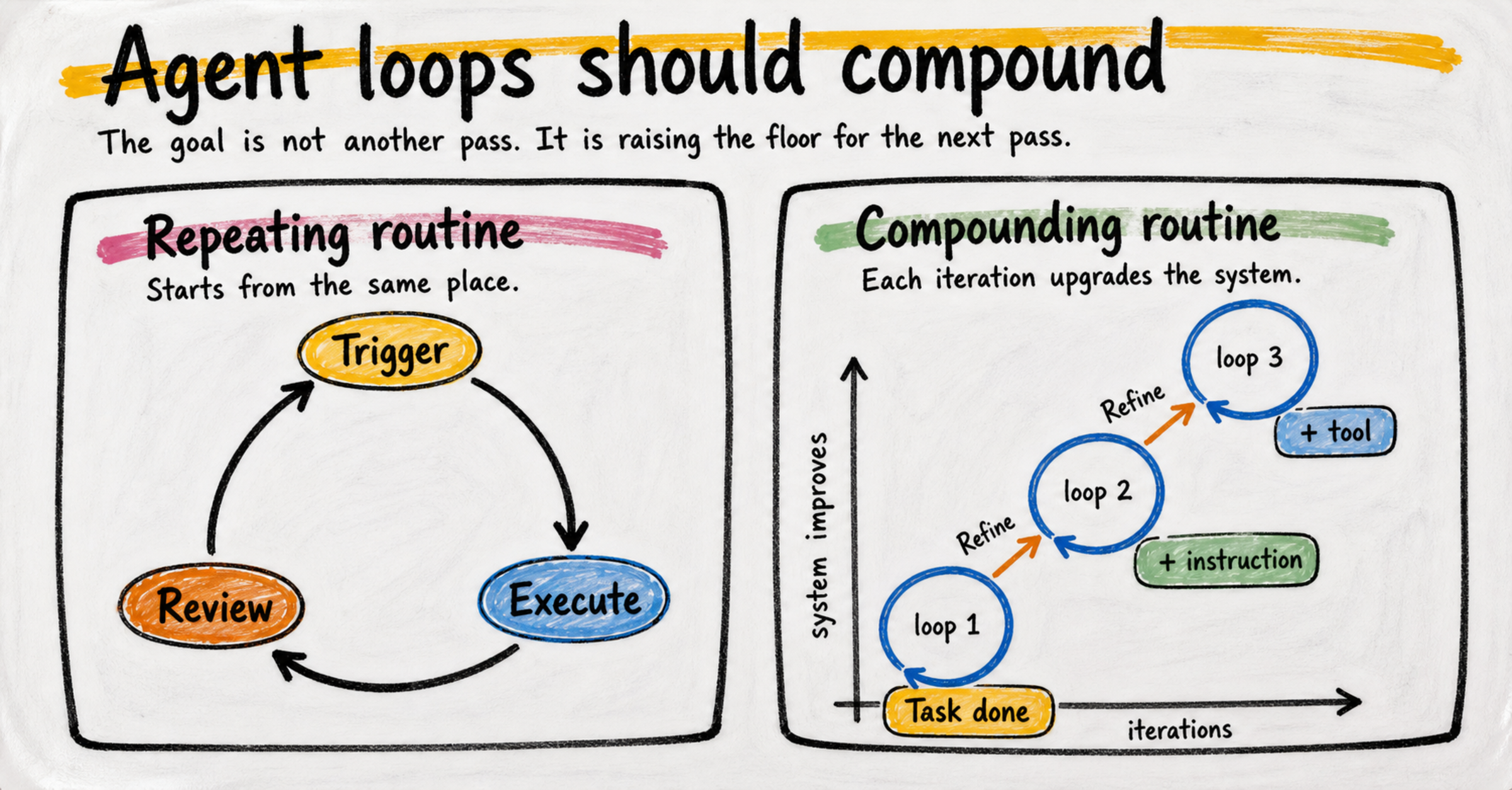
Loop engineering for AI agents should be about compounding, not repetition.
A weak work loop does the same thing every pass: trigger, execute, review.
A strong work loop leaves the system better than it found it.
Sure, many harnesses now automatically improve via agent memory. However, that's leaving your work to chance: memory creation is inconsistent, and false memories degrade performance.
The better way is to edit the loop itself:
- Skills/Instructions: conventions, assumptions, examples, failure modes
- Tools: scripts, workflows, fixtures, test harnesses
With each run, the loop becomes more capable, more reliable, and more cost-effective.
What are your go-to strategies for compounding?